
Mesh Wi-Fi System Design
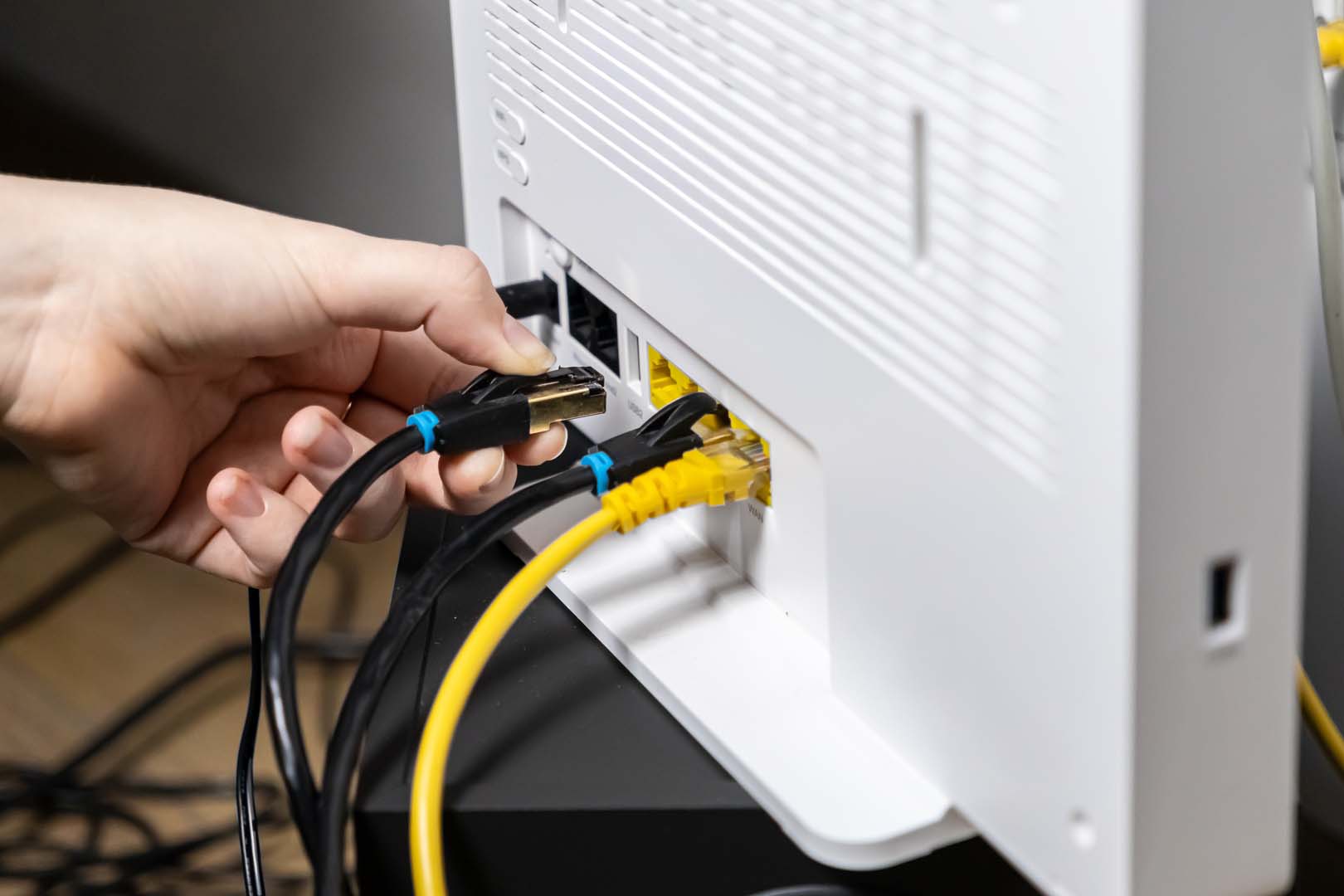
A mesh Wi-Fi system is only as good as its design. Merrimack Valley Wi-Fi PROS designs mesh Wi-Fi networks around your home’s layout, construction, existing Ethernet or coax, and wireless needs. Whenever possible, we use that existing wiring to connect access points rather than relying solely on wireless connections—delivering reliable coverage, seamless roaming, and consistent performance throughout your home.
A Better Mesh Wi-Fi Experience Starts with Better Design
Many homeowners purchase a mesh Wi-Fi system expecting it to eliminate dead zones and improve wireless performance. While mesh technology can be an excellent solution, simply placing mesh units around your home doesn’t guarantee reliable coverage.
At Merrimack Valley Wi-Fi PROS, we take a design-first approach. We evaluate how your home’s layout, construction materials, existing Ethernet or coax, and wireless needs affect the design before determining the right equipment, placement, and configuration. Whenever possible, we use existing wiring to connect access points, reducing reliance on wireless connections between them.
The result is a mesh Wi-Fi network designed around your home—not just where a manufacturer suggests placing a device.
When Is a Mesh Wi-Fi System the Right Solution?
Mesh Wi-Fi can be an excellent solution when a single router cannot provide reliable coverage throughout your home. The size and layout of the home, number of floors, construction materials, and where you need Wi-Fi all influence how many access points are needed and where they should be placed.
You may benefit from a professionally designed mesh Wi-Fi system if you experience:
weak signal in certain rooms/floors
Dropped Wi-Fi calls
Buffering
Existing mesh that still doesn’t perform consistently
Unreliable outdoor coverage
A properly designed mesh network helps ensure every part of your home stays connected.
Our Mesh Wi-Fi Design Process
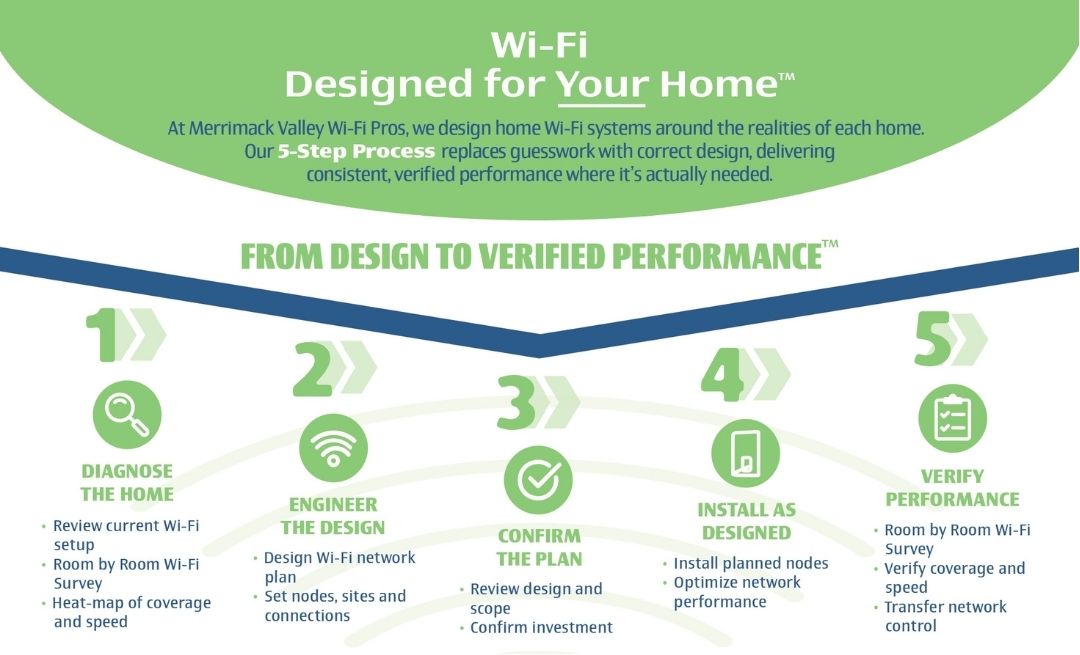
We Design Mesh Networks Around Your Home
Rather than relying on generic placement diagrams or trial and error, we evaluate how Wi-Fi actually needs to work in your home and design the network accordingly.
Our process includes:
Evaluating your home’s size, layout, and construction
Identifying building materials and other obstacles that affect Wi-Fi signals
Evaluating existing Ethernet or coax for wired connections
Determining the right number and placement of access points
Designing coverage for the areas where you actually need Wi-Fi
Configuring the system for reliable roaming between access points
Minimizing wireless interference and congestion
Testing and verifying network performance
Every recommendation is based on the realities of your home—not generic assumptions about where Wi-Fi equipment should go.
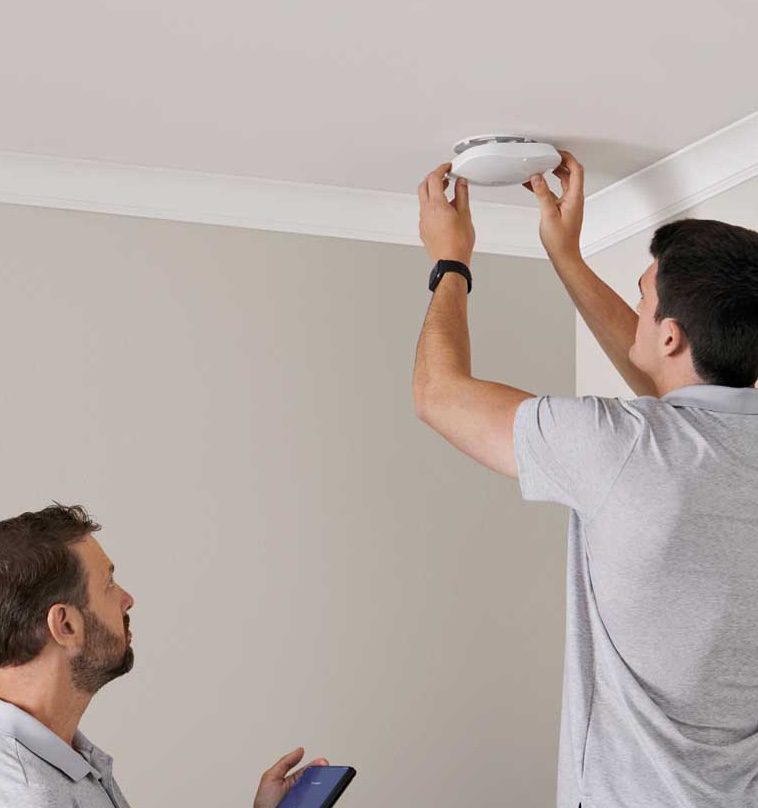
We Design Mesh Networks Around Your Home
Rather than relying on generic placement diagrams, we evaluate your home’s unique environment to determine the best network design.
Our process includes:
Evaluating your home’s layout
Assessing building materials and signal interference
Determining optimal node placement
Evaluating wired backhaul opportunities
Optimizing wireless coverage
Configuring seamless roaming
Reducing wireless congestion
Testing network performance
Every recommendation is based on how your home actually performs, not assumptions.
Designed for Today’s Connected Homes
Modern households rely on Wi-Fi for nearly every aspect of daily life.
Your mesh network may support:
Remote work
Video conferencing
Streaming entertainment
Online gaming
Smart TVs
Security cameras
Smart lighting
Voice assistants
Tablets and smartphones
Smart appliances
Home automation systems
Outdoor living spaces
A professionally designed mesh Wi-Fi system ensures these devices stay connected as you move throughout your home.

Not Every Home Needs More Mesh Nodes
One of the biggest misconceptions about mesh Wi-Fi is that adding more devices automatically improves coverage.
In reality, adding access points where they aren’t needed can increase wireless interference and congestion and lead to inconsistent performance. More isn’t always better.
Our goal isn’t to install as many devices as possible. It’s to determine the right number of access points, put them in the right locations, and connect and configure them properly for your home.
The result is reliable Wi-Fi coverage without unnecessary equipment or complexity.
Build a Mesh Network That Actually Performs
Installing a mesh Wi-Fi system is only part of the equation. Reliable performance comes from designing the system around your home—then placing, connecting, configuring, and testing it correctly.
Merrimack Valley Wi-Fi PROS designs mesh Wi-Fi systems for reliable whole-home coverage, seamless roaming, and consistent performance. Whether your current Wi-Fi isn’t getting the job done or you’ve already tried a mesh system that hasn’t solved the problem, we’ll design a solution around the realities of your home.
Contact Merrimack Valley Wi-Fi PROS today to schedule a Wi-Fi consultation and get Wi-Fi that works throughout your home.
Frequently Asked Questions
When should I add an access point instead of replacing my Wi-Fi system?
If your primary network delivers fast, stable internet across most of your home, but one specific room or addition struggles, adding a single hardwired access point (AP) is the most cost-effective fix. We utilize existing home coax or Ethernet drops to connect the new AP directly to your main gateway.
Are Wi-Fi extenders a good solution for weak coverage?
Plug-in extenders are generally problematic. When placed in a dead zone, an extender simply repeats a weak, degraded wireless signal, which doubles your network latency and cuts your throughput in half. Access points should always be connected via a hardwired backhaul whenever possible.
Why doesn't adding more mesh nodes always fix my Wi-Fi?
Adding unmanaged mesh nodes creates co-channel interference. When too many wireless nodes broadcast in close proximity without a hardwired backhaul, they compete for airtime and degrade overall network performance and reliability.
Is mesh Wi-Fi always the best option for a large home?
Wireless-only mesh is often a compromise because nodes lose speed as they relay data through walls. Mesh systems perform exceptionally well only when they are hardwired together (Ethernet or MoCA backhaul) so nodes do not consume wireless airtime communicating with each other.
Why did my mesh Wi-Fi work well at first but get worse over time?
Your mesh system may be handling heavier use, or you may be noticing limitations that were there from the start. A new system can feel like a major improvement over your previous setup while still leaving some rooms or activities poorly supported.
More video calls, streaming TV while working, and other simultaneous activities increase network demand. As the initial improvement becomes your new normal, remaining weak spots can become more noticeable.
Merrimack Valley Wi-Fi Pros evaluates coverage, capacity, placement, and connections between mesh units to identify those limitations and design the network around how you use your home today.